Wrenley Marlowe: A Delicate Script Font for Web Design
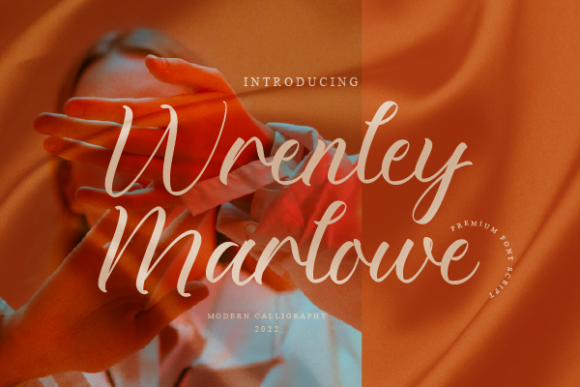
Wrenley Marlowe stands out as a refined choice among modern Fonts, offering web designers and digital creators a tool that balances elegance with functional clarity. As a Script Handwritten typeface, it brings a human touch to digital interfaces, breaking the monotony of standard sans serif layouts while maintaining the professionalism required for high-converting landing pages and brand-focused web experiences.
Elevating Brand Identity with Wrenley Marlowe in Digital Headers
When integrating Wrenley Marlowe into a website’s visual hierarchy, the hero section is often the most impactful placement. This Script Handwritten font excels in large-scale display roles, where its delicate strokes and fashionable curves can immediately communicate a brand’s tone. For online stores and boutique e-commerce sites, using this typeface in header banners creates an emotional connection with visitors before they even scroll. Unlike rigid geometric Fonts, Wrenley Marlowe introduces rhythm and flow, guiding the user’s eye naturally across the screen. Designers should leverage its unique character shapes to craft memorable first impressions, ensuring that the font size remains legible on desktop views while preserving its intricate details.
Optimizing Visual Hierarchy for Conversion-Focused Layouts
In conversion-focused layouts, such as course sales pages or coaching websites, typography dictates scanning behavior. Wrenley Marlowe serves best as a decorative accent for short phrases, subheadings, or call-to-action highlights rather than body copy. By pairing this Script Handwritten style with a clean, neutral sans serif font for primary text, you create a clear distinction between informational content and emotional triggers. This contrast helps users quickly identify key value propositions. When used sparingly in section headings, Wrenley Marlowe adds sophistication without compromising readability, ensuring that the design remains accessible while feeling premium and curated.
Enhancing Readability and Mobile Responsiveness with Script Fonts
One of the critical challenges when using Wrenley Marlowe in responsive web design is maintaining legibility on smaller screens. As a delicate Script Handwritten font, its fine lines can sometimes blur on low-resolution displays if scaled too small. To mitigate this, web designers must adjust line height and letter spacing carefully for mobile breakpoints. It is advisable to use Wrenley Marlowe only for titles and logos on mobile devices, avoiding its use in navigation menus or small buttons where clarity is paramount. Testing the font against various background colors is also essential; it performs exceptionally well on light, airy backgrounds but may require increased weight or shadow effects when placed over complex image overlays to ensure the strokes remain distinct and readable.
Strategic Font Pairing for Modern Web Interfaces
Selecting the right companion typeface is crucial when working with Wrenley Marlowe. Since this Script Handwritten font carries significant visual weight and personality, it pairs best with minimalist Fonts that do not compete for attention. A geometric sans serif works well for tech-forward brands or SaaS platforms, providing a structural counterpoint to the organic flow of the script. Alternatively, a classic serif font can enhance the editorial feel of lifestyle blogs or luxury product pages. The goal is to let Wrenley Marlowe shine as the star of the show while the supporting typography handles the heavy lifting of information delivery. This balance ensures that the overall design feels cohesive, professional, and easy to navigate.
Applying Wrenley Marlowe Across Digital Product Touchpoints
Beyond traditional website layouts, Wrenley Marlowe offers versatility for various digital assets. For UI designers creating app screens or digital product dashboards, this font can be used in onboarding flows or welcome messages to add a personal, welcoming touch. In email marketing templates and newsletter headers, Wrenley Marlowe helps break up text-heavy content, making promotional materials feel more like personal correspondence than corporate broadcasts. Its fashionable aesthetic also translates well to social media graphics and digital ads, where standing out in a crowded feed is essential. By maintaining consistent usage of this Script Handwritten style across all digital touchpoints, brands can reinforce their identity and build trust with their audience through recognizable visual cues.
Licensing and Technical Considerations for Web Implementation
Before deploying Wrenley Marlowe on client projects or commercial websites, it is vital to review the licensing terms associated with these Fonts. Ensure that the license covers webfont usage, including pageview limits if applicable, to avoid legal issues down the line. Technically, check for available file formats such as WOFF2 for optimal loading speeds and performance. While Wrenley Marlowe is designed to look extraordinary in a variety of contexts, verifying multilingual support is necessary if your target audience spans different regions. Additionally, explore any included alternates or stylistic sets that may offer variations for specific letters, allowing for further customization in logo design or unique branding elements. Proper implementation ensures that the font loads quickly and renders correctly across all browsers, preserving the intended delicate and fashionable appearance.
Ultimately, Wrenley Marlowe is more than just a decorative element; it is a strategic design asset that enhances brand perception and user engagement. By understanding its strengths as a Script Handwritten typeface and applying it with precision in digital environments, designers can create immersive, trustworthy, and visually stunning web experiences that resonate with modern audiences.